Overview
Traffic with no rules, rain that “moves”, and people who feel unreal — here’s what Singapore travellers should really know before visiting Jogja.
If you’re flying from Singapore to Yogyakarta for the first time, the culture shock doesn’t wait politely.
It starts the moment you leave the airport.
Not bad shock. Not scary shock.
The kind of shock that makes you look out the window and think:
“…okay, this is different.”
And that’s exactly why Singapore travellers fall in love with Jogja.
Let’s start with the part nobody warns you about:
Traffic.
If you grew up in Singapore loving clean lanes, strict rules, and mathematical precision… Jogja traffic will look like abstract art in motion.
Here, driving is not about rules.
It’s about reading people.
Motorbikes flow like water. Cars fill spaces that don’t technically exist. Somehow everyone moves, everyone adjusts, and almost nobody gets angry.

No honking concerts.
No road rage.
No shouting.
Just an unspoken agreement:
We all want to reach home safely.
It looks chaotic.
But it works.
Singapore travellers always sit quietly for the first few minutes watching this ballet. Then they laugh. Because once you accept the rhythm, it stops being scary and starts being beautiful.
Next shock:
The weather.
Temperature-wise, Jogja isn’t that different from Singapore. Warm, humid, tropical. But locals don’t talk about the weather in degrees.
They talk about belief.
Sometimes there are royal ceremonies in Yogyakarta — traditional palace rituals that still exist today. And locals swear they’ve seen this happen many times:
At the ceremony site… no rain.
One traffic light away?
Heavy rain.
People believe there are palace elders who can “move the rain.” Whether it’s science, coincidence, or folklore doesn’t matter. What matters is how seriously the story lives inside the culture.
As a visitor, you don’t argue with it.
You just smile and say:
“…okay, Jogja is different.”
And then there are the people.

Jogja friendliness isn’t tourism training. It’s default human setting.
If you look lost, someone helps.
If you ask directions, they walk with you.
If you smile, they smile back.
English is fine. Most people understand basic English.
Just one warning for Singapore visitors:
Go easy on the Singlish.
If you say:
“Can or not ah?”
You might get a 2-second loading screen.
Not because they don’t understand English.
Because their brain is searching for subtitles.
Jogja runs on global English, not Singlish firmware.
And finally: community.
Gotong royong — the culture of working together — is not a slogan here. It’s a lifestyle.
Heavy work is shared. Celebrations are shared. Problems are shared. Life is shared.
Think about this:
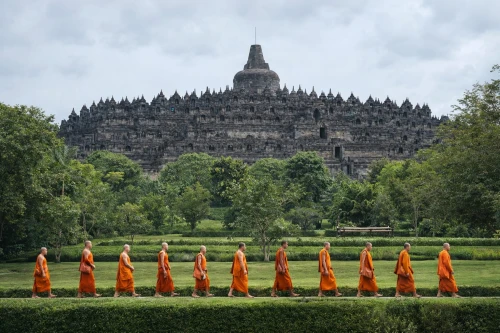
The largest temple complex in Southeast Asia exists here.
That wasn’t built by one man.
That was built by generations of people moving as one.
Jogja is modern and ancient at the same time. And Singapore travellers often say the same thing after 3 days:
“This place feels human.”
Not efficient. Not polished.
Human.
And sometimes that’s exactly what urban travellers need.
Travel Guide for Singapore Visitors (3D2N Jogja Trip)
If this is your first Jogja trip:
3 days 2 nights is perfect for a weekend escape from Singapore
Wear light clothing and comfortable footwear
Sunscreen is non-negotiable
Carry cash for rural areas
Don’t over-plan — leave space for surprises
Enjoy the slower rhythm
Jogja is not a checklist destination.
Jogja is a feeling destination.
If you want to experience Jogja without worrying about transport, routes, and timing, you can explore our trip guides at JogjaBorobudurTour.
We handle the road.
You collect the stories.